Complete AI POD Deployment Blocks
AI POD Modules
Caprelion does not sell individual racks. Caprelion delivers complete, dedicated AI POD / SU-class infrastructure blocks for large GPU clients.
Each AI POD is planned as an indivisible infrastructure block aligned to the customer's GPU cluster, power envelope, liquid cooling requirements, network architecture and deployment timeline.
Scaling Architecture
AI POD Deployment Scale
Multi-country AI POD Network — designed to scale from 1 to hundreds of AI PODs across multiple countries using one repeatable engineering blueprint
Indivisible SU-Class Delivery Model
Each AI POD is planned as a complete infrastructure environment aligned to the customer's GPU cluster, power envelope, liquid cooling requirements, network architecture and deployment timeline. Caprelion does not split this model into individual colocation racks.
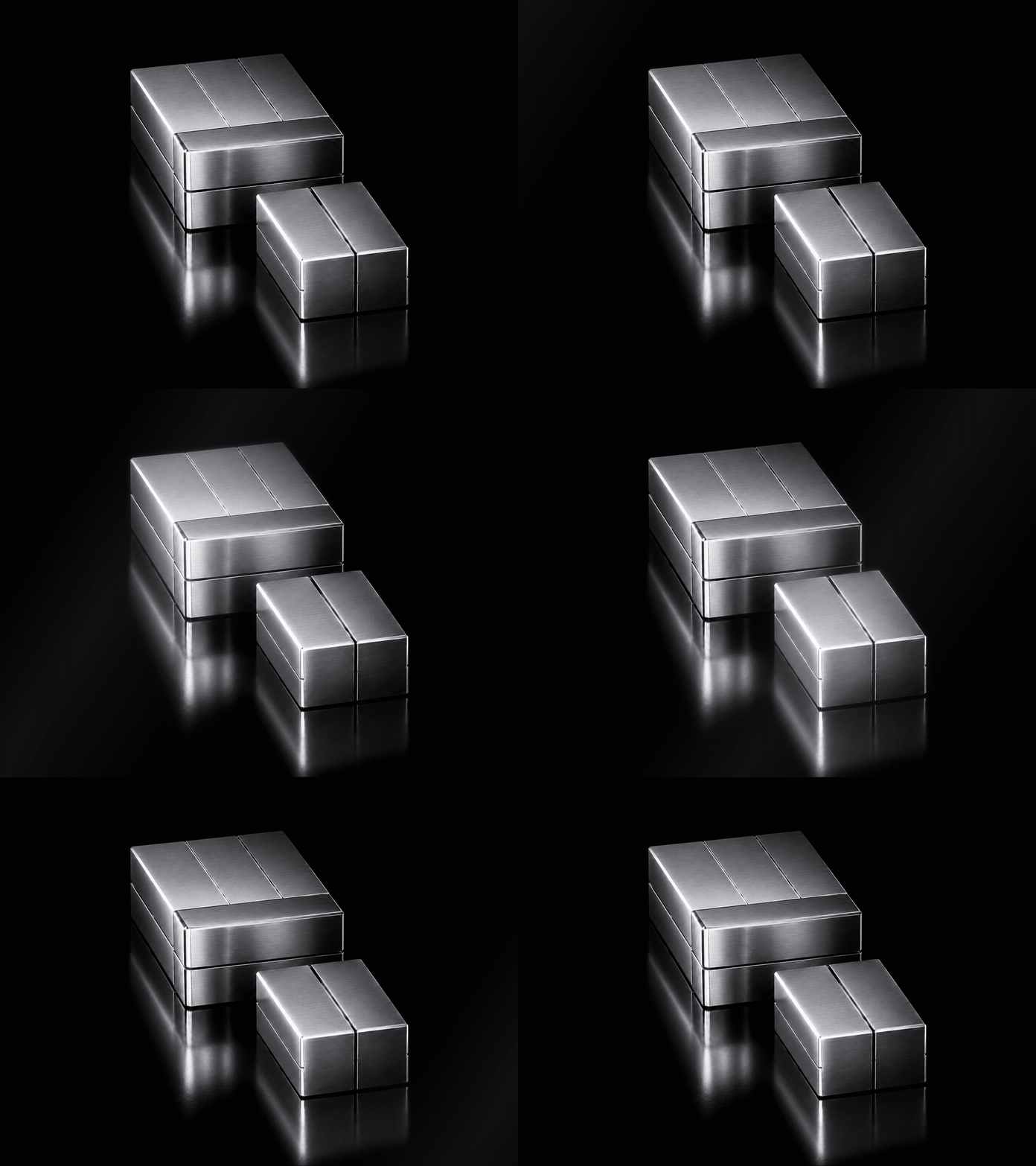
AI POD-1.2
Planning Envelope
1.2 MW
Commercial unit
1 SU / 1 AI POD
Total IT Load
~1,200 kW
Compute Racks
8 high-density AI compute racks
AI Rack Density
~127–142 kW per rack
Support Racks
Config-dependent
Cooling Model
Liquid cooling dominant, air cooling support
Redundancy
Subject to final design
Typical Use Case
One customer-owned AI server cluster. GB200/GB300 NVL72-class planning logic.
Customer Profile
Single GPU cloud operator or sovereign AI cluster deployment
AI POD-2.5
Planning Envelope
~2.5 MW
Commercial unit
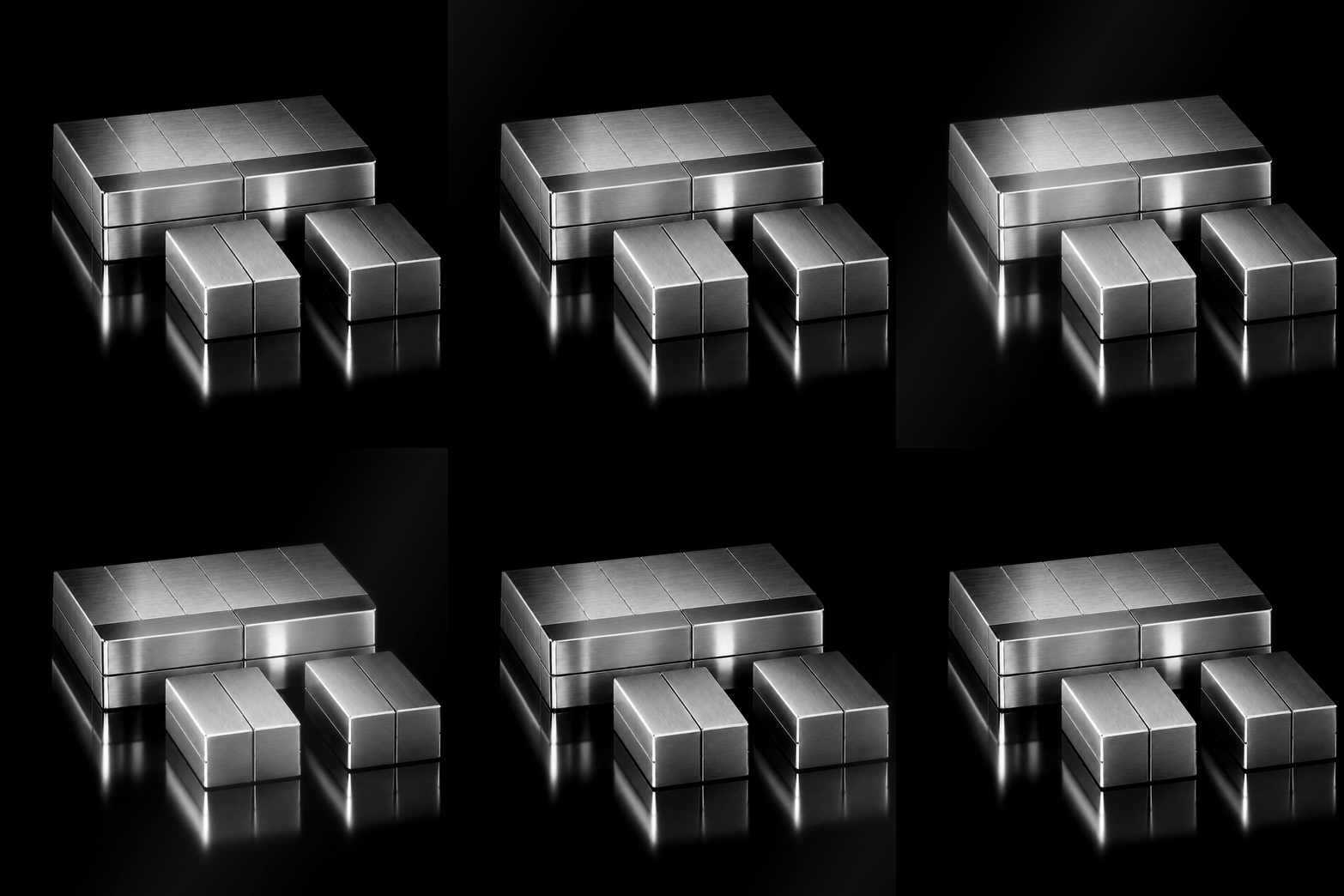
2 AI PODs (~1,256 kW each)
Total IT Load
~2,512 kW
Compute Racks
16 high-density compute racks @142 kW
AI Rack Density
~142 kW per rack
Support Racks
24 support racks @10 kW (~40 total)
Cooling Model
Liquid dominant, air cooling support
Redundancy
4-to-make-3 power / N+1 cooling
Typical Use Case
Larger GPU cloud, sovereign AI or enterprise AI factory deployment.
Customer Profile
GPU cloud operators, government AI programs, enterprise AI factories
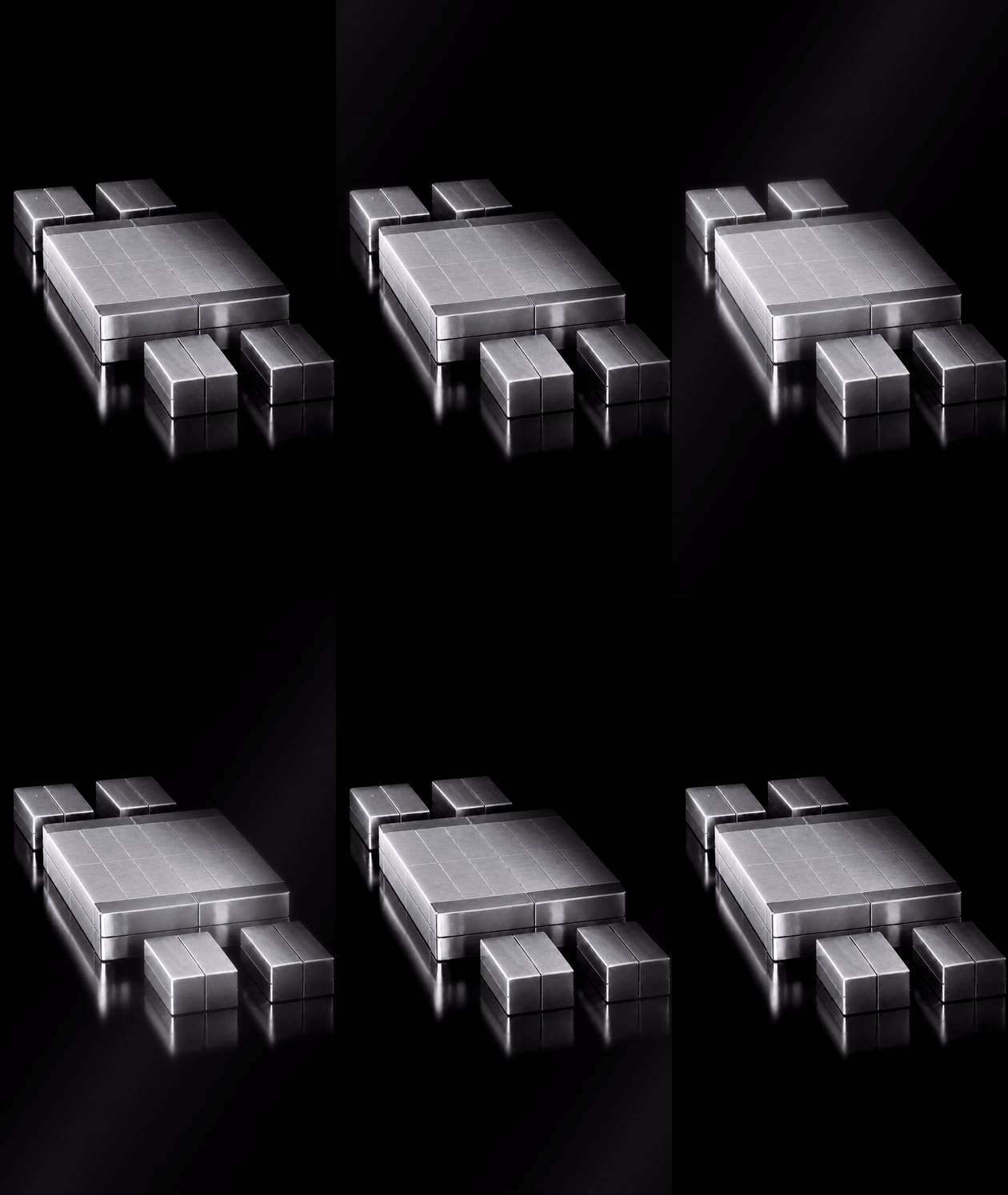
AI POD-5
Planning Envelope
~5 MW
Commercial unit
4 AI PODs (~1,256 kW each)
Total IT Load
~5,024 kW
Compute Racks
32 high-density compute racks @142 kW
AI Rack Density
~142 kW per rack
Support Racks
48 support racks @10 kW (~80 total)
Cooling Model
Liquid cooling dominant
Redundancy
Multi-POD redundancy architecture
Typical Use Case
Multi-POD customer or single large dedicated deployment.
Customer Profile
Large GPU cloud platforms, national AI compute programs
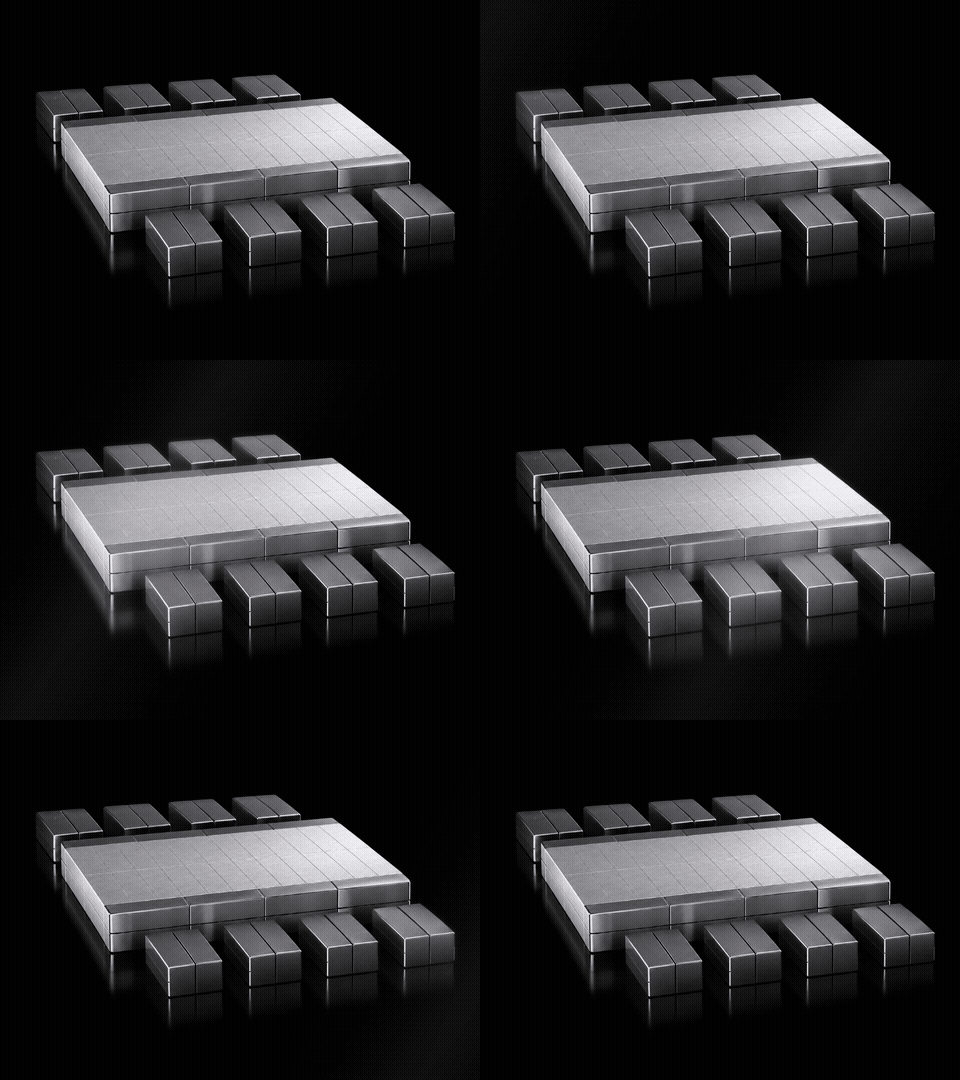
AI POD-10
Planning Envelope
~10 MW
Commercial unit
4 large PODs (~2,496 kW each)
Total IT Load
~9,984 kW
Compute Racks
64 high-density compute racks @142 kW
AI Rack Density
~142 kW per rack
Support Racks
64 support racks @14 kW (~128 total)
Cooling Model
Liquid dominant, facility-scale heat rejection
Redundancy
Facility-scale redundancy
Typical Use Case
Large customer deployments, multi-SU expansion, multi-country sovereign AI.
Customer Profile
Sovereign AI platforms, hyperscale GPU cloud, enterprise AI factories
Side-by-Side
Deployment Block Comparison
| Block | IT Load | POD Logic | Compute Racks | Support Racks | Cooling | Typical Use | Network Role |
|---|---|---|---|---|---|---|---|
| POD-1.2 | ~1.2 MW | 1 POD (SU) | 8 @127–142 kW | Config-dep. | Liquid + air | Single GPU cluster | Edge / single node |
| POD-2.5 | ~2,512 kW | 2 PODs | 16 @127-142 kW | 24 @10 kW | Liquid + air | GPU cloud / sovereign AI | Cluster expansion |
| POD-5 | ~5,024 kW | 4 PODs | 32 @127-142 kW | 48 @10 kW | Liquid dominant | Multi-POD / enterprise | Country node |
| POD-10 | ~9,984 kW | 4 large PODs | 64 @127-142 kW | 64 @14 kW | Liquid + facility | AI factory / sovereign | National / multi-country |
All values are planning envelope references subject to site conditions, OEM/EPC validation and final engineering design.
Engineering Foundation
AI POD Design Principles
Power and cooling must be designed together
High-density AI infrastructure cannot be designed as power first and cooling later. These systems must be planned as one integrated unit.
AI clusters must align to capacity blocks
Caprelion aligns AI clusters to repeatable AI POD capacity blocks to reduce stranded power and improve deployment repeatability.
Redundancy and blast radius must be managed
AI POD design must consider total cost of ownership, redundancy, operational risk and blast radius at the POD level.
AI workload surges require buffers
AI workloads create dynamic power and thermal behavior. Caprelion planning includes logic to handle workload surges.
Mixed liquid and air cooling is expected
Direct-to-chip liquid cooling and air cooling support are interdependent and must be designed together.
Design for future GPU generations
AI rack power density is increasing. Caprelion infrastructure is planned with flexible modernization paths for higher density and future GPU refresh cycles.
Compliance Framework
Compliance-Ready AI POD Delivery
Caprelion AI POD infrastructure is delivered under a compliance-ready framework, designed for alignment with leading data center, security, quality and sustainability standards.
Data Center Infrastructure
Design and operations standard
Information Security
Management system readiness
Quality Management
System readiness
Sustainability Principles
Environmental assessment
Commissioning Framework
Handover and testing
Operations Readiness
Ongoing management
Designed for compliance alignment and project-specific certification readiness. Final certification depends on project scope, audit, commissioning, local authority requirements and assessor review. Caprelion does not claim formal certification unless separately confirmed.